 blog
blog
Large Property Hedge Trimming Services
Table of Contents
- Why Large Property Hedge Trimming Requires Professional Service
- Commercial Hedge Trimming Services for Acreage and Business Properties
- How Often Should Large Property Hedges Be Trimmed
- Hedge Trimming Equipment for Large-Scale Work
- Safety and Insurance in Large Property Hedge Trimming
- Managing Overgrown Hedges on Large Properties
- Getting Started with Reliable Hedge Trimming Service
- Frequently Asked Questions
Last Updated: October 11, 2026
Why Large Property Hedge Trimming Requires Professional Service
Large property hedge trimming is fundamentally different from maintaining a suburban backyard. When you're managing hedges across multiple acres or commercial grounds, the scale, equipment demands, and safety considerations shift dramatically. A DIY approach with hand shears won't cut it. You need professional-grade equipment, trained operators, and a clear understanding of what the job actually involves.
The reality is straightforward: overgrown hedges on large properties don't just look untidy. They create fire hazards in bushfire-prone areas, obstruct sight lines, harbour pests, and can breach council compliance standards. Terra Maintenance has worked with properties across the Dandenong Ranges where neglected hedges became liability issues. The fix requires planning, the right machinery, and experience managing large-scale vegetation.
Professional large property hedge trimming services handle what homeowners and small contractors simply cannot. The liability exposure is real. And the time investment on a 2-acre property with established hedges can stretch weeks if you're working alone with basic tools.
Commercial Hedge Trimming Services for Acreage and Business Properties
Commercial hedge trimming services differ from residential work in scope, frequency, and compliance requirements. If you manage rental properties, business grounds, or acreage, you're likely dealing with council regulations, tenant expectations, or fire-hazard obligations that demand scheduled, documented maintenance.
Terra Maintenance provides commercial hedge trimming services tailored to properties that need consistency and proof of work. We maintain over 320 local properties across the region, many of them multi-hectare sites requiring coordinated trimming schedules. For commercial clients, we document every visit, track hedge health, and align work with council compliance windows.
| Service Type | Frequency | Best For | Key Benefit |
|---|---|---|---|
| Routine hedge maintenance | Quarterly to bi-annual | Established hedges in good condition | Prevents overgrowth, maintains shape |
| One-off overgrowth management | As needed | Neglected or newly acquired properties | Brings hedges back to manageable state |
| Fire-hazard reduction | Spring and autumn | Bushfire-prone areas | Meets council fuel-reduction standards |
| Commercial grounds upkeep | Monthly to quarterly | Rental properties, business sites | Maintains tenant satisfaction and compliance |
Acreage properties present unique challenges. You're working with longer hedge lines, often across uneven terrain with mixed vegetation types. Blackberry and ragwort encroachment is common on larger blocks in the Ranges. Professional commercial hedge trimming services account for these variables. We bring the right equipment mix, schedule work around seasonal growth patterns, and handle green-waste removal on-site.
How Often Should Large Property Hedges Be Trimmed
Hedge trimming frequency depends on hedge species, local climate, and your goals. On large properties, getting the timing right prevents the cycle of neglect followed by expensive overgrowth recovery.
In the Dandenong Ranges, most established hedges benefit from trimming twice per year: once in late spring (October to November) and again in late summer (February to March). This timing works with the growing season and catches growth before it becomes unmanageable. Some slower-growing species like box or privet can stretch to annual trimming. Fast-growing varieties or hedges in high-visibility areas may need three passes per year.
The real variable is your maintenance history. A well-maintained hedge on a 2-acre property might need quarterly attention. A neglected hedge that's already overgrown requires an initial heavy trim followed by a recovery schedule of more frequent visits over 12 to 18 months to bring it back into shape.
Fire-hazard reduction adds another layer. If your property sits in a bushfire overlay area, councils often require cleared space around hedges and reduced fuel load. This typically means spring trimming (September to November) as a minimum, sometimes supplemented by autumn work (March to May) depending on local fire-danger ratings.
Hedge Trimming Equipment for Large-Scale Work
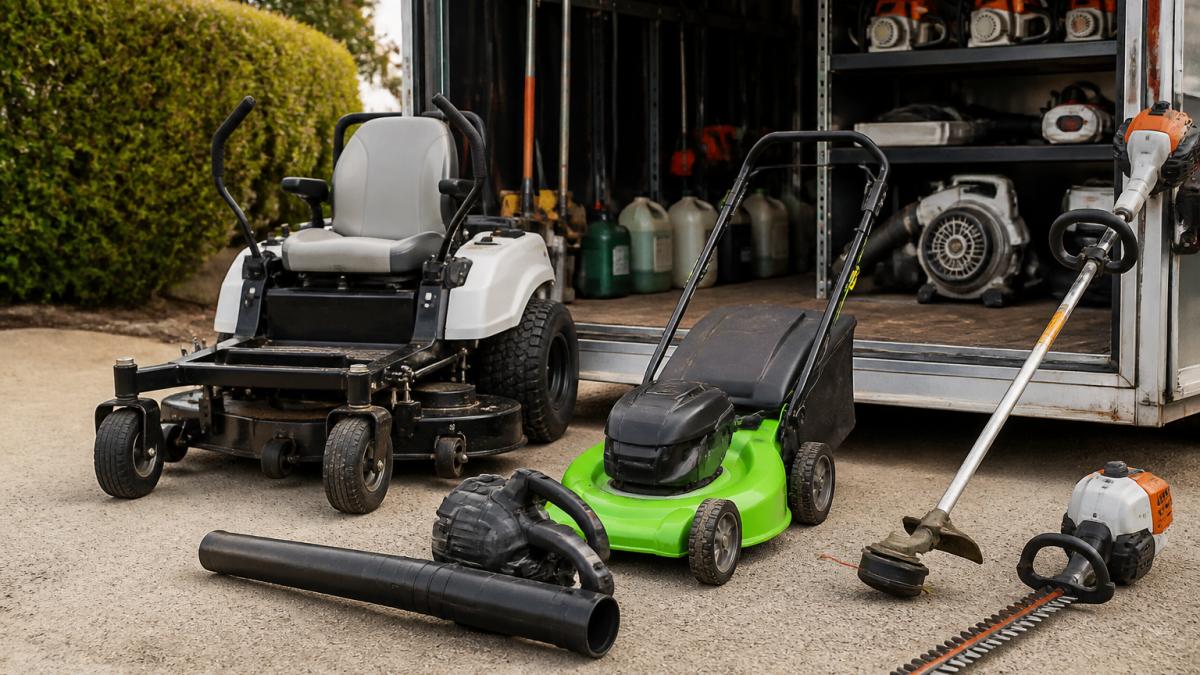
The equipment you use defines what's possible on a large property. Hand shears work for small spaces. Petrol hedge trimmers handle suburban yards. Large property hedge trimming demands professional-grade machinery that balances power, weight, and operator endurance.
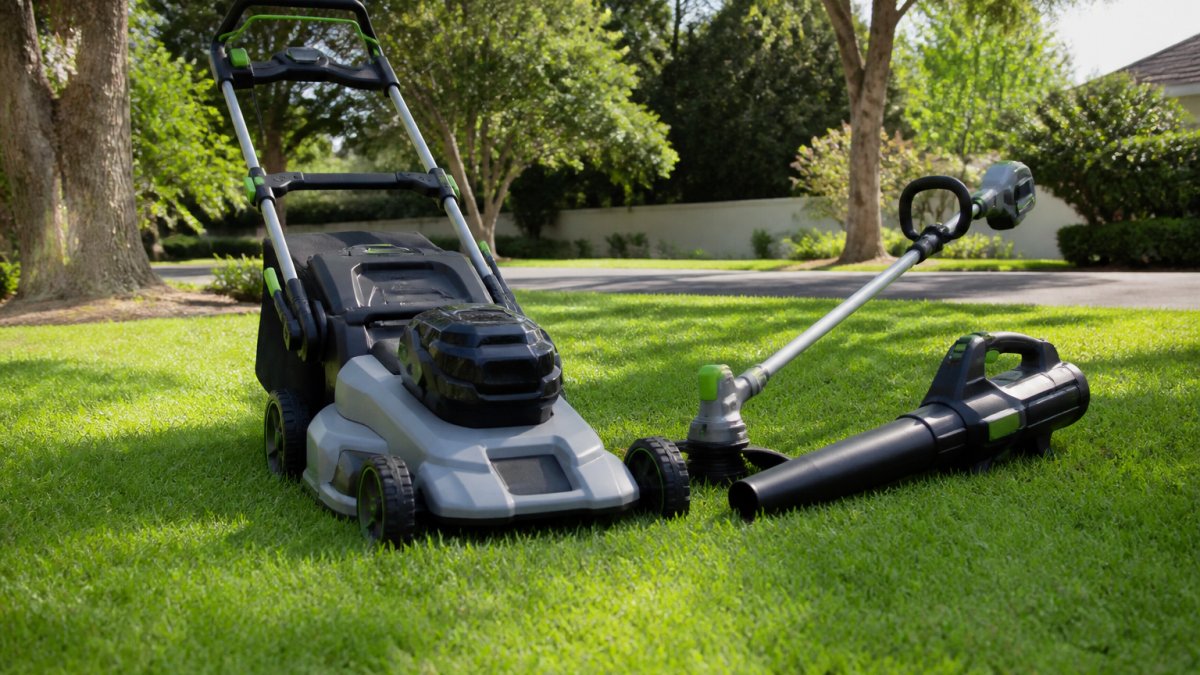
Terra Maintenance uses quiet battery-powered equipment across our service area. This choice matters on large properties for several reasons. Battery equipment produces minimal noise, so early-morning or evening work doesn't disturb neighbours. It's lighter than petrol equivalents, which reduces fatigue on all-day jobs and handles steep terrain better on clay soils.
For large hedges, we deploy multiple equipment types:
- Handheld battery hedge trimmers for detailed shaping and accessible sections
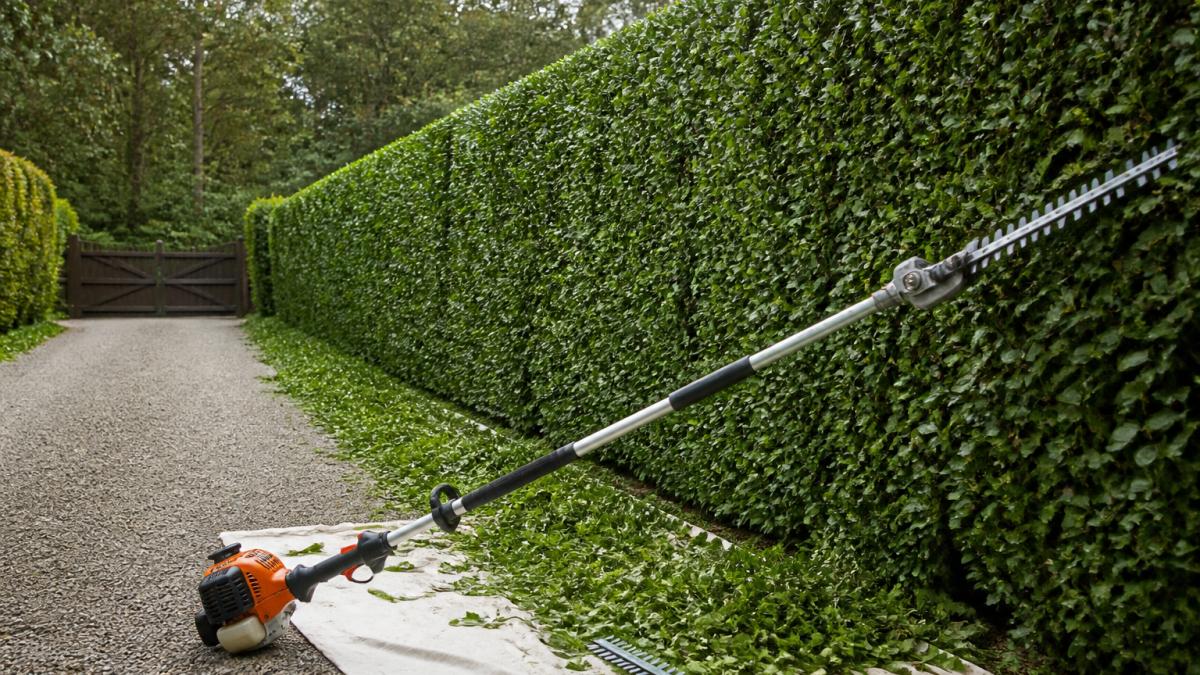
- Pole trimmers for reaching upper growth without ladders
- Commercial mulching equipment to process green waste on-site
- Blowers and collection systems for cleanup
Equipment selection directly affects crew size and project timeline. A single hedge line across 200 metres with moderate overgrowth requires careful planning. A 5-hectare property with multiple hedge lines, mixed density, and steep terrain may require a larger team and more time, depending on waste removal scope and access points.
Waste handling also drives equipment and crew decisions. If clippings are collected and removed off-site, you need a truck, a loader, and additional labour. If material is mulched on-site, you need commercial-grade chipping equipment and space to process volume.
Access constraints reshape the entire operation. Properties with narrow driveways, gates, or steep entry points may require hand-carrying equipment or using smaller machines that fit through tight spaces. This increases labour time and may require additional visits.
The scale of work determines equipment selection. A single hedge line across 200 metres requires different planning than managing hedges around a 5-hectare property. Professional services account for terrain, hedge density, access points, and waste disposal. That's why equipment investment matters. You're not just trimming; you're managing the entire operation.
Safety and Insurance in Large Property Hedge Trimming
Safety on large properties isn't optional. You're working at height, managing heavy equipment, navigating uneven terrain, and often working near structures or utilities. One incident can be catastrophic.
Terra Maintenance carries $20 million public liability insurance and operates with full compliance across all work sites. This matters for your protection. If someone is injured or property is damaged during large property hedge trimming, you need contractors who are properly insured and trained.
Large properties introduce specific risks. Steep terrain increases slip hazards. Overhanging branches near power lines create electrocution risks. Falling branches can damage fences, vehicles, or structures. Unsecured debris can shift during removal. Professional operators understand these scenarios and plan accordingly.
Insurance isn't just a checkbox. It's evidence that a contractor has been assessed by insurers as competent and low-risk. Fully insured contractors carry police checks, maintain equipment safely, and follow documented procedures. When something goes wrong on a large property, insurance and proper training are the difference between a resolved issue and a legal liability.
Managing Overgrown Hedges on Large Properties
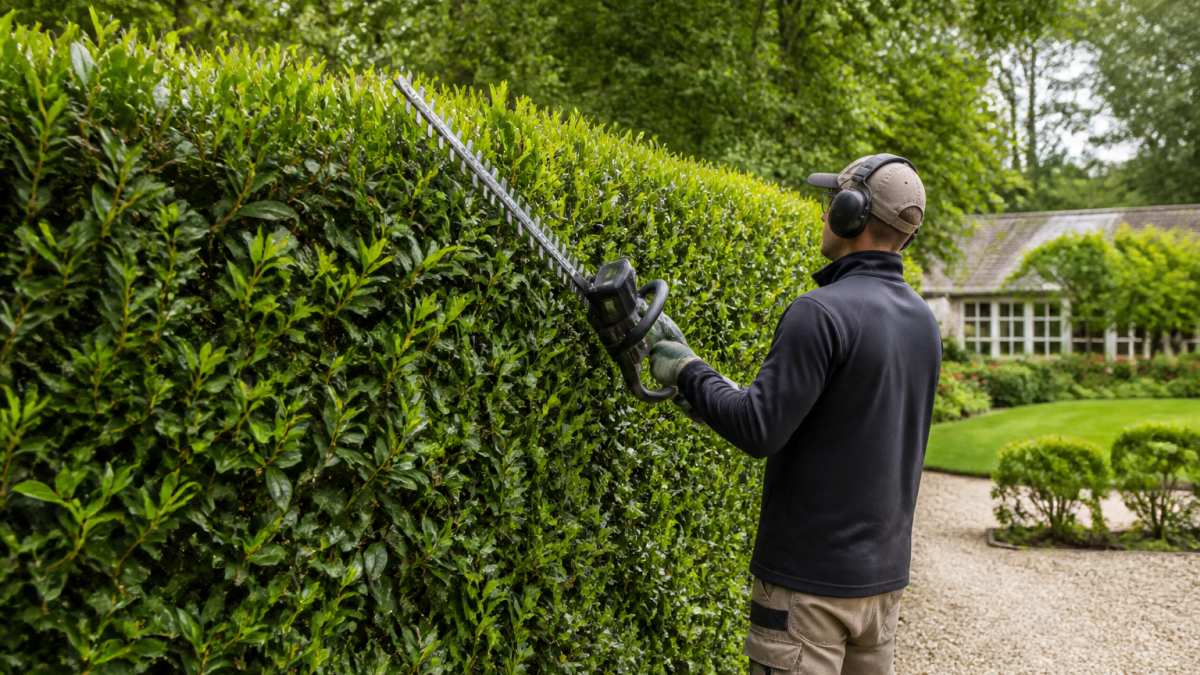
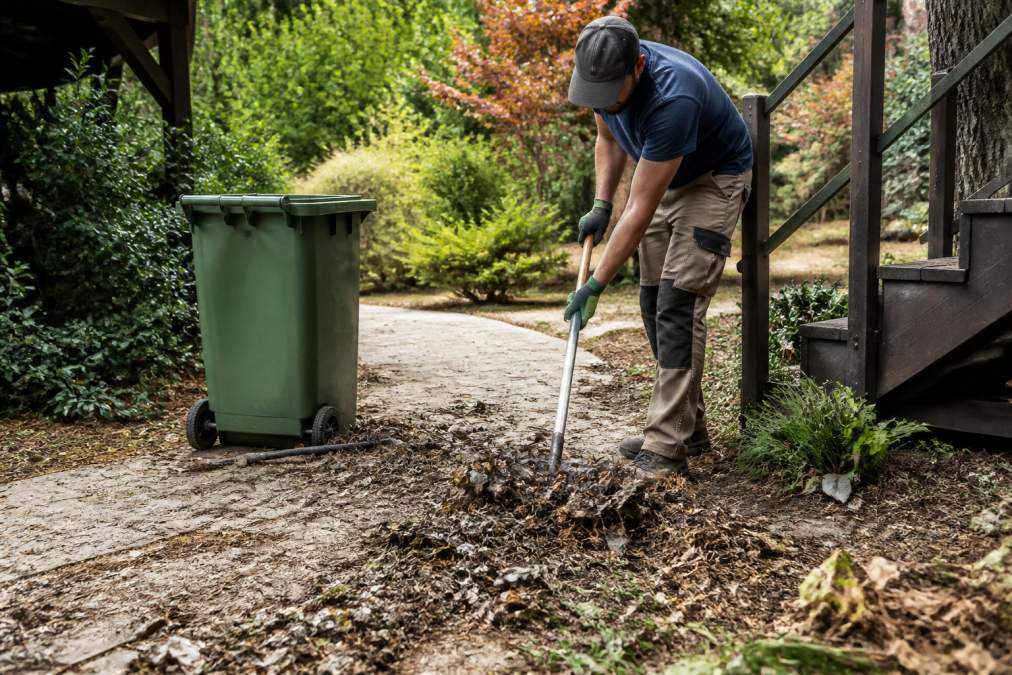
Overgrown hedges are the most common starting point for large property maintenance. A property that's been neglected for two years, a newly acquired block with established but unkempt hedges, or a rental property where previous tenants didn't maintain grounds all present the same challenge: bringing structure back to chaos.
The recovery process has three phases. First is the heavy cut: removing bulk overgrowth and dead wood, often cutting back 30 to 50 centimetres or more. This looks dramatic but is necessary. Second is the shaping phase: creating defined lines and encouraging dense, healthy growth. Third is the maintenance phase: regular trimming on a predictable schedule to prevent regression.
On large properties, this timeline typically runs 12 to 18 months. You won't get a perfectly manicured hedge after one visit to a severely overgrown site. What you get is a plan: initial recovery work, follow-up visits at 6 to 8 week intervals, and a clear path to a maintained state.
Terra Maintenance manages this progression on acreage properties across the Dandenong Ranges. We document the condition at each stage, adjust trimming depth based on hedge response, and work with seasonal growth patterns. Spring and early summer are optimal for heavy recovery work. Autumn allows a final shape-up before winter dormancy.
Getting Started with Reliable Hedge Trimming Service
Starting a large property hedge trimming relationship means finding a contractor who understands your specific situation and commits to consistency. Many property owners in the Dandenong Ranges have been burned by contractors who don't show up, send different people each visit, or deliver inconsistent quality.
Terra Maintenance operates differently. We're owner-operated by Harrison and Jesse Ashford. You work with the same team across visits. We use GPS-optimised scheduling to ensure reliable timing. We document every job and maintain detailed records so you have proof of work for compliance or insurance purposes.
When you contact a hedge trimming service for a large property, be ready to provide specific information so the estimate is accurate. Contractors need to know:
- Total hedge length in metres (walk the perimeter or measure on a map)
- Current hedge height and desired final height
- Hedge density and overgrowth severity (light trim, moderate overgrowth, or severely neglected)
- Terrain type (flat, sloping, steep) and soil conditions
- Access points and any obstacles (power lines, structures, fences)
- Whether you want waste collected off-site or mulched on-site
- Frequency of future maintenance (one-off recovery, quarterly, bi-annual, or seasonal)
Estimate costs vary based on these factors. A property with established, well-maintained hedges requiring routine trimming will have different costs compared to a property with overgrown, mixed-species hedges on sloping terrain where waste must be removed off-site.
For fire-hazard reduction work, council requirements also shape the estimate. If your property sits in a bushfire overlay zone, you may need cleared space around hedges, reduced fuel load, and documented compliance. This requires specific trimming depth and timing aligned with council fuel-reduction periods (typically spring, September to November).
The first step is straightforward: contact Terra Maintenance for a free estimate. We assess your property, identify hedge lines and condition, discuss your goals (maintenance, overgrowth recovery, fire-hazard reduction, or a combination), and outline a clear plan with timing and what to expect.
From there, we establish a schedule that fits your property's needs. For most large properties, that means quarterly to bi-annual visits. For commercial or rental properties with compliance obligations, we align work with council requirements and provide documentation.
Frequently Asked Questions
How often should large property hedges be trimmed?
Trimming frequency depends on hedge species, growth rate, and your property's appearance goals. Most large hedges benefit from professional trimming one to three times annually. Fast-growing varieties like privet may need more frequent attention, whilst slower species like box require less. Spring and autumn are ideal trimming windows in the southern hemisphere. A professional service provider can assess your specific hedges and recommend a maintenance schedule that keeps them healthy and neat year-round.
What equipment is used for trimming large hedges?
Professional large property hedge trimming uses specialised equipment suited to scale and precision. Battery-powered hedge trimmers offer quiet, efficient operation without fuel or emissions, making them ideal for residential and commercial properties. For extensive overgrowth, contractors may use pole trimmers to reach height, and chippers to process green waste on-site. Equipment selection depends on hedge height, density, and the property's access. A reliable service provider will use maintained, appropriate tools and remove clippings responsibly.
Can overgrown hedges be trimmed back safely?
Yes, overgrown hedges can be managed, though the approach varies by species and condition. Some hedges tolerate hard pruning and recover well; others need gradual reduction over multiple seasons to avoid stress or die-back. Professional assessment is essential before starting work on severely neglected hedges. A qualified contractor will determine whether single-session reduction or staged trimming suits your hedges, and will advise on recovery time and future maintenance to prevent regrowth.
What should I look for in a large property hedge trimming service?
Choose a service with experience on acreage and large residential properties, full public liability insurance, and a clear understanding of local conditions like clay soils and bushfire compliance. Reliability matters: consistent scheduling and the same experienced team build trust. Ask about their approach to green waste, whether they provide documentation of work completed, and how they handle site access and safety. A professional service will offer a free estimate, explain their process, and be transparent about timelines and what's included.