 how-to
Quiet Garden Maintenance for Homes: A 2026 Guide
Table of Contents
- Why Quiet Garden Maintenance Matters for Homes
- Quiet Battery-Powered Garden Tools: What Actually Runs Quietly
- Low-Maintenance Garden Ideas That Cut Future Work
- Building a Garden Maintenance Schedule Around Your Neighbours
- Battery Garden Tool Storage Tips for Winter
- How Quiet Garden Maintenance for Homes Handles Overgrown Blocks
- Frequently Asked Questions
Last Updated: October 15, 2026
Why Quiet Garden Maintenance Matters for Homes
Quiet garden maintenance for homes means keeping a property neat using equipment that will not disturb the street. Battery-powered mowers, trimmers and blowers cut noise sharply compared with petrol tools. That matters on smaller blocks where fences sit close together.
It also matters for your own household. A mower running at conversation volume lets you work early on a Saturday without a neighbour knocking. And it lets you finish the job in the cool of the morning, which suits summer in the hills.
At Terra Maintenance, we run battery equipment on every job. We also schedule around the neighbours, because a clean garden should not cost you goodwill on the street.
There is a practical edge too. Battery tools start first pull, every time. No fuel, no fumes, no mixing oil.
Quiet Battery-Powered Garden Tools: What Actually Runs Quietly
Battery mowers, line trimmers and hedge trimmers are the quietest tools in a home garden. A battery blower is quieter again, though it still carries on a still morning.
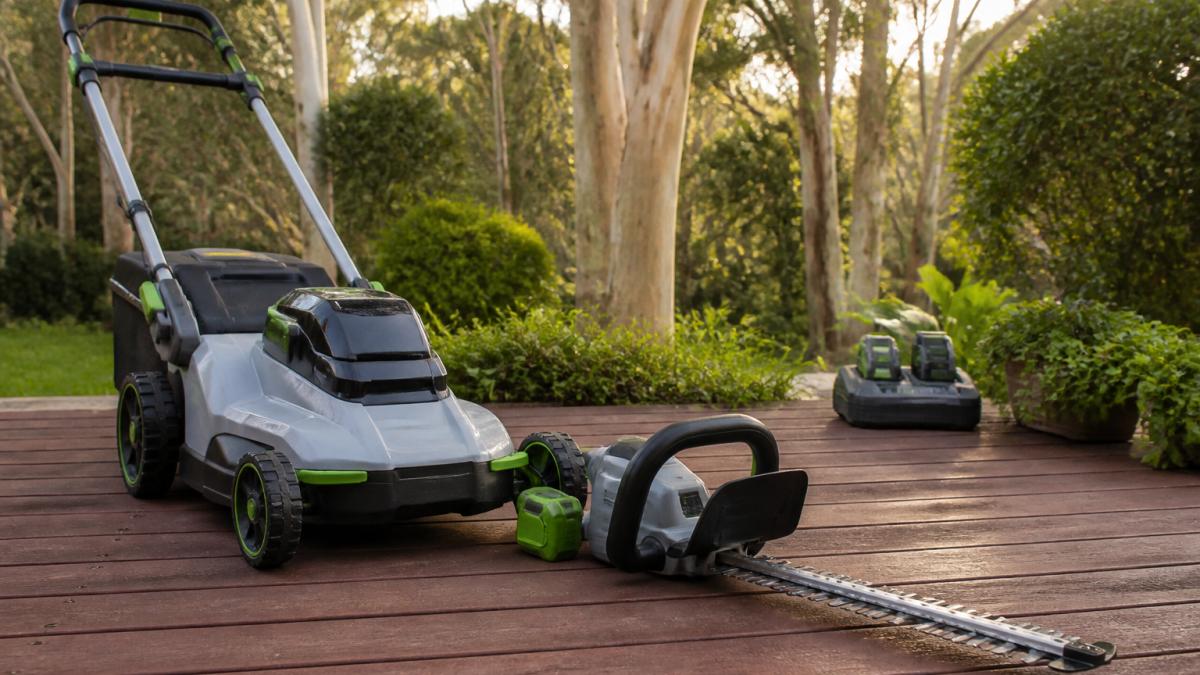
Here is what to expect from each:
- Mower: low hum, no engine bark. Fine for early starts.
- Line trimmer: light whine. Good for edges and around posts.
- Hedge trimmer: steady buzz. Cuts cleanly on thin growth.
- Blower: the loudest of the four. Use it later in the day.
- Chainsaw: reserve it for real limbs, not tidy-ups.
Why battery is quieter than petrol
A petrol engine makes noise in three places at once: the exhaust, the combustion inside the cylinder, and the vibration through the frame. A battery motor makes noise in one: the spinning cutting head. That is the whole difference, and it is why a battery mower can run at conversation volume while a petrol mower cannot.
There is a second effect that matters on close-set blocks. Petrol noise is low-frequency, so it travels further and passes through fences and windows more easily. Battery noise is higher-frequency and drops off faster with distance. On a sloping block in the hills, that is the difference between a neighbour hearing the job and a neighbour hearing nothing.
Battery versus petrol: the trade-offs
| Factor | Battery | Petrol |
|---|---|---|
| Noise | Low hum, conversation level | Idle bark plus engine revs |
| Starting | Push button, first time | Pull cord, choke, warm-up |
| Fumes | None | Exhaust at head height |
| Maintenance | Charge, clean, store | Oil, filters, spark plug, fuel |
| Runtime | Limited per battery, swap to continue | Refuel and keep going |
| Weight | Lighter, easier on slopes | Heavier, harder on steep ground |
| Running cost | Cheaper per job, higher upfront | Cheaper upfront, higher per job |
For most home blocks, the runtime limit is not a problem. A spare battery covers a full mow, edge and blow. For large or steep blocks, plan the job in stages so one battery covers one pass.
What to look for when choosing
- Match the tool to the job, not the other way around. A mower for lawn, a trimmer for edges, a blower for hard surfaces.
- Buy into one battery platform so packs swap between tools.
- Check the cutting width. A wider deck means fewer passes and less total noise time.
- Choose brushless motors where available. They run cooler, last longer and are quieter again.
- Keep a spare battery charged so you never stop mid-job.
Petrol gear is the opposite. It idles loud, revs louder, and carries across a gully. On a quiet street, that is the difference between a neighbour waving and a neighbour complaining.
For a full comparison of tool types and their best uses, see our guide to battery-powered outdoor equipment.
Low-Maintenance Garden Ideas That Cut Future Work
The cheapest garden to maintain is the one you design to need less. Fewer edges, tougher plants, and a thick mulch layer do more than any gadget. Design also decides how loud the garden is to keep, because fewer edges and slower growth mean less mowing, trimming and blowing over the life of the block.
Start with these low-maintenance garden ideas:
- Replace lawn strips with garden beds and mulch.
- Choose drought-tolerant plants and hardy succulents.
- Plant native species suited to clay soils.
- Group pots together so one watering covers the lot.
- Lay a defined edge so trimming stays quick.
- Use groundcover plants to crowd out weeds instead of spraying.
- Keep a narrow mowing strip beside fences so a trimmer is rarely needed.
Design for the block you have
Clay soils in the hills compact hard in winter and bake in summer. Breaking that up once, then mulching well, saves years of patch repairs. On steep and sloping blocks, terracing or retaining beds reduces the mowing area and the risk of loose footing. On blocks in a bushfire overlay, keep fuel loads low near the house and choose plants that do not carry fire into the canopy.
Match the design to the garden style
Different garden styles need different quiet maintenance routines. A short checklist for each:
- Native garden: prune lightly after flowering, remove spent flower heads, top up mulch in spring, and hand-weed rather than spray. Most natives resent heavy pruning.
- Succulent garden: remove dead leaves, check drainage before winter, and water deeply but rarely. Overwatering is the main killer.
- Formal garden: trim hedges on a set schedule to keep lines sharp, edge beds monthly, and mow at a consistent height. Regular light cuts are quieter than occasional heavy ones.
- Cottage garden: deadhead to extend flowering, stake tall plants before summer storms, and divide crowded clumps in autumn.
- Lawn-dominant garden: mow weekly in summer, edge fortnightly, and aerate in autumn to fight compaction on clay.
Mulch and weeds
Organic mulch is the single best weed control you can buy. Spread it thick, and blackberry and ragwort struggle to get a start. Both are declared noxious weeds in Victoria, so early removal is worth the effort. A thick mulch layer also holds moisture through a dry January and keeps the soil cooler, which slows growth and reduces how often you need to mow or trim.
Quiet maintenance by design
A garden designed for quiet maintenance has three traits: fewer hard edges, slower-growing plants, and a clear separation between lawn and beds. Each one reduces the number of times a tool is needed. Over a year, that adds up to fewer early starts, less noise on the street, and a garden that stays neat with less effort.
Building a Garden Maintenance Schedule Around Your Neighbours
A garden maintenance schedule should match the seasons and the street. Do the loud jobs when people are awake, and the quiet jobs whenever you like.
Here is a simple schedule that works in the hills:
| Season | Main Jobs | Best Time of Day |
|---|---|---|
| Summer (Jan-Feb) | Mow, edge, water early | Before 10am |
| Autumn (Mar-May) | Leaf removal, mulch, gutter clean | Mid-morning |
| Winter (Jun-Aug) | Prune, weed, tool storage check | Late morning |
| Spring (Sep-Nov) | Mow weekly, hedge trim, fertilise | Mid-morning |
Summer mowing is the big one. Kikuyu, couch and buffalo lawns grow fast in January, so weekly cuts keep them under control.
Autumn brings gum leaf and bark litter. Clear it before it builds up in gutters, especially if you are in a bushfire overlay area.
Battery Garden Tool Storage Tips for Winter
Battery garden tool storage tips for winter come down to three things: charge level, temperature and dryness. Get those right and your batteries will still hold charge in spring.
- Store batteries at about half charge, not full.
- Keep them above freezing, ideally indoors.
- Never leave them on a concrete floor in a shed.
- Clean and dry tools before storing.
- Remove batteries from tools for the off-season.
- Check charge once a month.
Winter in the hills is cold and damp. A shed that feels fine in March can drop close to freezing in July. Cold is what shortens battery life, so bring them inside.
Sharpen blades and trimmer line before you pack tools away. You will thank yourself in September.
How Quiet Garden Maintenance for Homes Handles Overgrown Blocks
Overgrown blocks need a staged approach, not one loud blitz. We clear in passes so the work stays manageable and the noise stays spread out.
A typical overgrown job looks like this:
- Walk the block and map the problem areas.
- Slash the tall growth first.
- Cut back blackberry and other noxious weeds.
- Clear green waste and chip what we can.
- Mow and edge once the ground is clear.
- Set a schedule so it never gets that bad again.
Steep and sloping blocks need care. Loose footing, hidden rocks and old fence wire all slow a job down. We work methodically rather than rushing.
If your council has raised grass height concerns, we can document the work done. That helps owners and property managers show compliance.
For more on managing large or neglected blocks, see Agriculture Victoria on weed control.
Frequently Asked Questions
How can I reduce noise when mowing or trimming hedges?
Switch to battery-powered equipment, which produces far less noise than petrol models. Schedule mowing and hedge trimming for mid-morning on weekdays, when most neighbours are already up and about. Keep blades sharp so the motor runs at a lower load, and avoid early Sunday starts. If you use a contractor, ask whether they run quiet battery gear. Terra Maintenance uses battery equipment on every job, which keeps noise low for you and the street.
Which battery-powered garden tools are quieter for home use?
Battery lawn mowers, line trimmers, hedge trimmers and blowers are all noticeably quieter than their petrol equivalents because they have no combustion engine. The exact noise level varies by model, so check the decibel rating on the specification sheet before buying. As a general rule, battery tools let you work in the cooler parts of the day without disturbing neighbours who work from home or have young children.
How often should a home garden be maintained?
Most lawns in the Dandenong Ranges and outer south-east Melbourne need mowing every two to four weeks through spring and summer, then less often in the cooler months. Hedges typically need trimming two to three times a year, with a heavier cut after the main growth flush. A written garden maintenance schedule keeps the work predictable and makes it easier to plan quiet sessions around your neighbours.
What garden maintenance tasks can be done quietly?
Hand weeding, mulching, pruning with bypass secateurs, raking leaves and sweeping hard surfaces are all quiet tasks. Battery-powered mowers, trimmers and blowers add very little noise compared with petrol versions. For larger jobs, such as overgrowth management, leaf removal or gutter cleaning, book a professional service that uses battery equipment and can complete the work in one efficient visit.
A garden that suits the street takes planning, the right tools and a schedule you can keep. Terra Maintenance handles all three. We are owner operated by Harrison and Jesse Ashford, fully insured with $20 million public liability cover, and we have maintained more than 320 local properties. Our battery-powered equipment keeps noise low, and our GPS-optimised scheduling keeps visits consistent. Get a free estimate from Terra Maintenance and keep your garden tidy without the racket.