 ultimate-guide
Lawn Maintenance Insurance Requirements Australia: 2026 Guide
Table of Contents
- What Insurance Is Actually Required for Lawn Maintenance in Australia?
- Public Liability Insurance for Gardeners: Limits, Excess and Certificates
- Contractor Insurance Requirements Victoria: Subcontractors, Sole Traders and Companies
- Workers Compensation Insurance Victoria: When It Applies and Who It Covers
- Tools, Equipment and Commercial Motor Cover for Lawn Maintenance Businesses
- Risk Management for Landscaping Services: Reducing Claims Before They Happen
- How a Claim Usually Unfolds, and What Insurers Ask For
- Conclusion
- Frequently Asked Questions
Last Updated: September 18, 2026
What Insurance Is Actually Required for Lawn Maintenance in Australia?
No single national law forces every lawn maintenance operator to hold lawn maintenance insurance. What applies depends on three layers: federal tax and workplace rules, state work health and safety legislation, and your clients' contractual terms.
Federal, State and Contractual Layers
Three bodies of rules govern what a lawn maintenance business must carry.
- Federal: the Australian Taxation Office governs how you structure your business and report income, and the Fair Work system sets employment conditions.
- State: Safe Work Australia coordinates national policy, while each state's own work health and safety regulator enforces the law locally. In Victoria, that is WorkSafe Victoria.
- Contractual: real estate agencies, strata managers and commercial clients set their own minimum cover requirements before they will engage you.
Public Liability Insurance for Gardeners: Limits, Excess and Certificates
Public liability insurance covers third-party injury and property damage arising from your work. It does not cover your own tools, your own injuries, or faulty workmanship. The indemnity limit is the maximum the insurer pays for any single claim. The excess is what you pay first.
What a Certificate of Currency Shows a Client
A certificate of currency is a one-page document from your insurer confirming your policy is active on the date it was issued. It shows the insured business name, policy number, cover type, indemnity limit, policy period and insurer details, but not your claims history, excess or exclusions. Send a fresh certificate at each renewal, because an expired certificate is the fastest way to lose a recurring contract.
Cover Type | Protects | Typically Required By |
|---|---|---|
Public liability | Third-party injury, property damage | Most client contracts |
Workers compensation | Employees injured at work | State law, once you employ |
Tools and equipment | Theft, damage to your gear | Optional, strongly advised |
Commercial motor | Vehicle damage, third-party liability | Registration and finance terms |
Personal accident | Your own income if injured | Optional for sole traders |
Contractor Insurance Requirements Victoria: Subcontractors, Sole Traders and Companies
Your business structure changes what you need and who is legally on the hook when something goes wrong on a client's property. A sole trader has no legal separation between personal and business assets, so a claim exceeding your cover exposes your personal assets. A registered company creates a separate legal entity, which limits personal exposure, but the company still needs its own public liability policy.
State-by-State Regulatory Nuance
Most guides treat insurance requirements as a single national rule. They are not. The legal obligation sits with each state's work health and safety regulator; the practical obligation sits with each council and client contract.
- Victoria: WorkSafe Victoria administers workers compensation. Public liability is not mandated by statute for a sole trader with no employees, but it is required by most commercial and strata contracts.
- New South Wales: SafeWork NSW administers workers compensation, and icare is the nominal insurer. Public liability is again contractual rather than statutory for sole traders.
- Queensland: WorkCover Queensland administers workers compensation. Public liability is contractual.
- South Australia: ReturnToWorkSA administers workers compensation. Public liability is contractual.
- Western Australia: WorkCover WA administers workers compensation, and the state has a separate workers compensation regime rather than the national model.
- Tasmania: WorkSafe Tasmania administers workers compensation.
- Northern Territory: NT WorkSafe administers workers compensation.
- Australian Capital Territory: WorkSafe ACT administers workers compensation.
Subcontractors Versus Sole Traders: The Liability Gap
Subcontractors are the most misunderstood category. If you engage one, you can be held responsible for their conduct on your client's property under your own duty of care. Four checks matter:
- Confirm the subcontractor holds their own current public liability policy
- Collect a certificate of currency before they start, and diarise the renewal date
- Check whether your own policy extends cover to subcontractors or excludes them
- Confirm whether the subcontractor is a genuine contractor or legally an employee
Practical Steps Before You Engage Anyone
- Ask for a certificate of currency before the first shift.
- Check the policy period and diarise the renewal date.
- Confirm in writing whether your own policy responds to subcontractor conduct.
- If the arrangement looks like employment, treat it as employment for insurance purposes.
- Keep a register of subcontractors, their insurer, policy number and renewal date.
If you are unsure whether a subcontractor is a deemed worker, check directly with WorkSafe Victoria's guidance on insurance obligations before you assume you are exempt. Penalties for operating without required cover scale with the period you were uninsured.
Workers Compensation Insurance Victoria: When It Applies and Who It Covers
Workers compensation insurance Victoria becomes a legal obligation the moment you employ anyone, including casual and part-time staff.
Tools, Equipment and Commercial Motor Cover for Lawn Maintenance Businesses
Your gear is your income. Tools and equipment cover protects against theft, accidental damage and, depending on the policy, machinery breakdown. Lawn maintenance businesses face a specific set of risks here:
- Equipment stolen from an unlocked trailer or an open ute tray
- Damage from moisture, dust or impact on steep ground
- Breakdown mid-job during peak spring growth
- Fuel or battery systems damaged in transit
Risk Management for Landscaping Services: Reducing Claims Before They Happen
Risk management for landscaping services is the cheapest insurance you will ever buy. A documented process reduces the frequency and severity of claims, and insurers look favourably on businesses that can show one.
A Practical Mitigation Checklist
Work through this before each job, and keep the completed checklist with your job records.
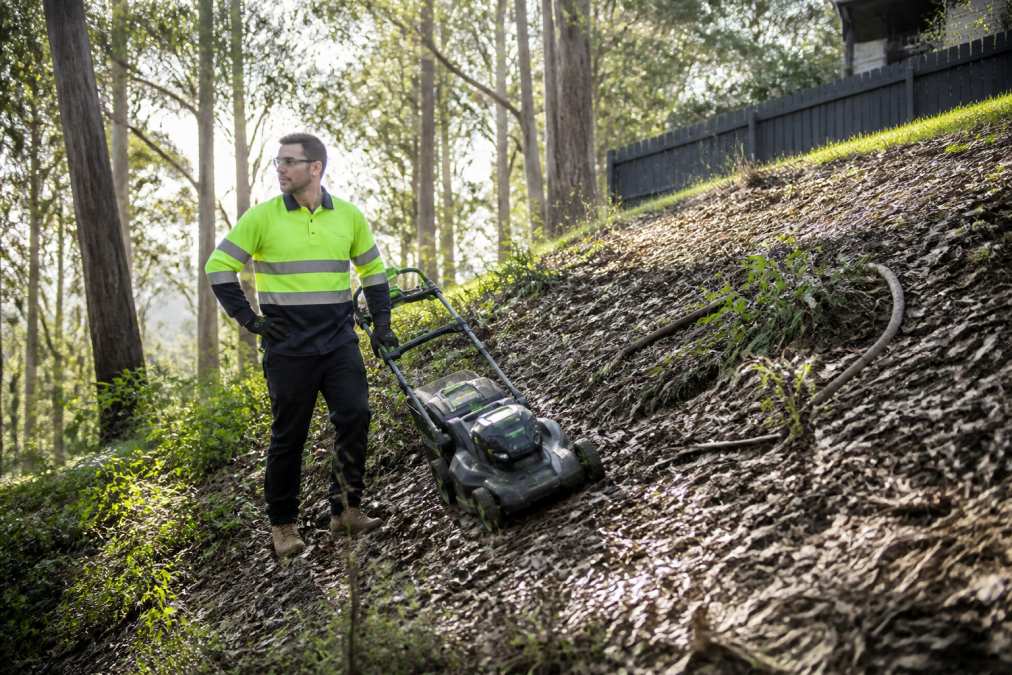
- Site access: confirm the safest route for the mower and trailer, and note any steep sections that need a spotter.
- Overhead hazards: check for powerlines, dead limbs and overhanging branches, particularly after summer storm activity.
- Ground conditions: flag wet clay, moss on paved paths, and any concealed holes or irrigation lines.
- Equipment: inspect blades, guards and battery systems before use, and store batteries away from moisture.
- Bushfire overlay: confirm fuel reduction obligations and check total fire ban restrictions before starting.
- Noxious weeds: identify blackberry and ragwort, which are declared noxious weeds in Victoria, and manage them without spreading seed or root fragments.
- Client communication: confirm the scope in writing, including what is excluded, so expectations are clear.
Seasonal and Local Risk Patterns
Seasonal timing matters. Spring growth from September to November drives the heaviest workload, and fatigue-related incidents rise. January heat brings dehydration and equipment overheating. July cold and wet conditions bring slips on clay and moss.
Turning Risk Management Into a Premium Conversation
Insurers price on perceived risk. A business that can show a written risk assessment process, a maintenance schedule, a training record and a clean claims history is a better risk than one that cannot. At renewal, provide:
- Your risk assessment template and a sample completed form.
- Your equipment maintenance log.
- Your incident and near-miss register.
- Your subcontractor insurance register.
How a Claim Usually Unfolds, and What Insurers Ask For
A claim rarely plays out the way operators expect. The process is slow, document-heavy and weighted toward evidence gathered at the time of the incident. Here is the typical sequence:
- Incident occurs. Someone is injured, or property is damaged.
- Immediate response. Make the site safe, provide first aid, call emergency services if needed.
- Notification. Report to your insurer promptly. Delays give an insurer grounds to question the claim.
- Evidence collection. Photographs, witness details, your risk assessment, your maintenance records.
- Liability assessment. The insurer determines whether the policy responds and to what extent.
- Claim settlement. Payment, negotiation, or denial depending on the findings.
Conclusion
The rules around lawn maintenance insurance requirements australia are layered, and the contractual layer usually matters more in day-to-day work than the legislative one. Get public liability cover in place, confirm your workers compensation position with WorkSafe Victoria, and protect your equipment and vehicle separately.
Frequently Asked Questions
What type of insurance is required for a lawn mowing business?
Public liability insurance is the cover most clients and contracts expect, and it pays for third-party injury or property damage caused during your work. Workers compensation is legally required in Victoria once you employ workers, with limited exemptions for some sole traders. Plant, equipment and commercial motor cover protect your own assets. Professional indemnity applies when you give paid advice, such as weed or vegetation management recommendations, rather than mowing alone.
Is public liability insurance mandatory for gardening contractors?
It is not mandatory under a single national law, but it is effectively required in practice. Strata managers, real estate agencies, councils and commercial clients routinely ask for a certificate of currency before work starts, and a contract clause makes the cover a contractual obligation. Terra Maintenance carries $20 million public liability, which is the limit most commercial and strata contracts request. Always confirm the required limit before signing.
How does working in bushfire-prone areas affect insurance requirements?
Bushfire overlay and fuel reduction obligations do not change your insurance type, but they change how insurers assess your risk. Slashing long grass, removing bark and leaf litter and maintaining defendable space are common contract conditions on blocks in the Dandenong Ranges. Documenting that work, including dates and before-and-after photos, supports both council compliance and any future claim. Tell your insurer if you regularly work on steep or heavily vegetated blocks.
What is the difference between public liability and workers compensation insurance for sole traders?
Public liability covers injury or damage you cause to other people and their property. Workers compensation covers your own workers if they are injured on the job, and in Victoria it is mandatory once you employ someone, with limited exemptions available for some sole traders. The two policies do different jobs and one does not replace the other. Check your situation with WorkSafe Victoria or a licensed broker before relying on an exemption.