 how-to
Clearing Overgrown Acreage in the Dandenong Ranges: 2026 Guide
Table of Contents
- Step 1: Get a Site Assessment and Understand Your Block
- Step 2: Check Planning Permits and Vegetation Rules Before Clearing Overgrown Acreage
- Step 3: Manage Noxious Weed Removal in Victoria
- Step 4: Meet Bushfire Management Overlay Requirements
- Step 5: Clear and Mulch the Block Safely
- Step 6: Set Up Acreage Mowing Services and Ongoing Land Maintenance
- What It Costs to Clear Overgrown Acreage
- Common Mistakes to Avoid When Clearing Land
- Frequently Asked Questions
Last Updated: September 17, 2026
Step 1: Get a Site Assessment and Understand Your Block
Clearing overgrown acreage starts with a site assessment, not a machine. Before any scrub removal, you need to know what is growing, how steep the ground is, and what rules apply.
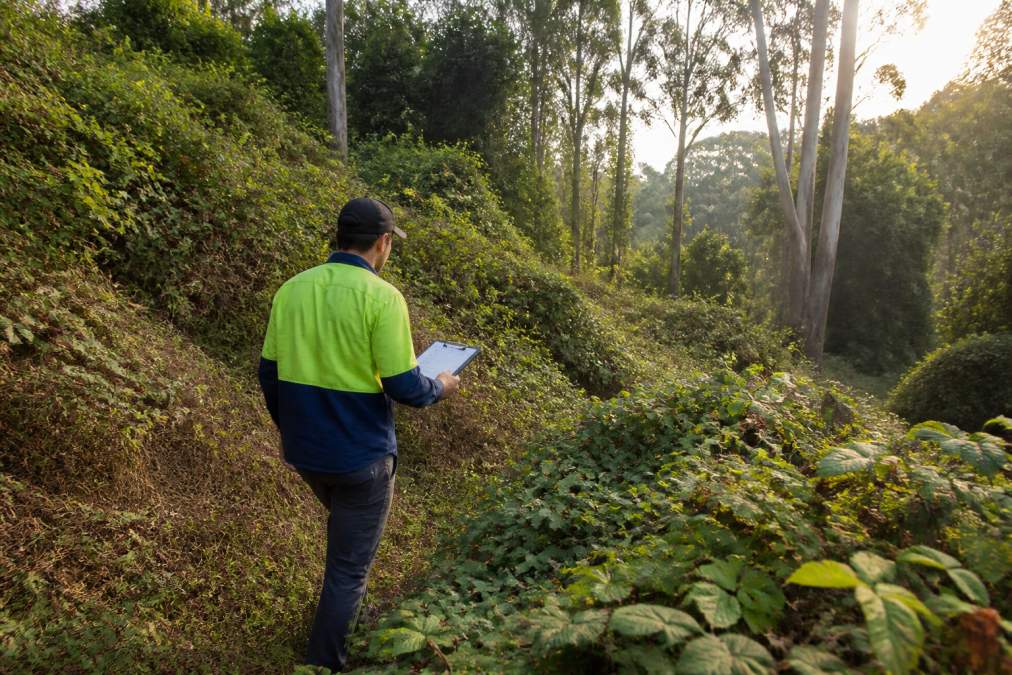
A site assessment covers five things:
- Vegetation density and species: what is grass, what is scrub, and what is a declared noxious weed
- Slope and access: can a machine physically reach the work area, and where will cut material go
- Native vegetation: any remnant or regrowth that may be protected
- Overlay controls: bushfire management overlay, green wedge zoning, and any council requirements
- Services and hazards: powerlines, water mains, septic systems, and fences
Step 2: Check Planning Permits and Vegetation Rules Before Clearing Overgrown Acreage
Most clearing on private land in the Dandenong Ranges does not need a planning permit, but some does. Clearing overgrown acreage without checking first is the most expensive mistake landowners make here, and revegetation orders are common.
Green Wedge Zone and Native Vegetation Protection
Large parts of the Dandenong Ranges sit in the Green Wedge Zone, which restricts land use to protect agriculture, landscape and environmental values. Native vegetation is protected under Clause 52.16 and Clause 52.17. You can generally clear introduced grass, weeds and planted garden species without a permit, but not remnant native trees, understorey or protected species.
How to Apply for a Planning Permit
If a permit is required, the process runs through your local council. These steps reflect the standard pathway across Yarra Ranges, Cardinia and Knox.
- Confirm the requirement with your council's planning department. Provide your address, the proposed clearing area in square metres, and the species you intend to remove. Ask whether your block is affected by the Bushfire Management Overlay (BMO), Significant Landscape Overlay (SLO) or Environmental Significance Overlay (ESO).
- Engage a qualified ecologist to assess native vegetation if the site has remnant bush. The report must apply the statewide Habitat Hectares scoring method, which determines whether an offset is required.
- Lodge the application with a site plan, the vegetation report and a description of the works. The site plan must show the clearing boundary, trees to be retained, and machinery access routes.
- Respond to referrals, which may include the Country Fire Authority for BMO land, Melbourne Water near waterways, and DEECA for protected wildlife or listed vegetation communities.
- Await a decision, then comply with any conditions on offset planting or staged clearing. Offsets can be satisfied on-site, off-site, or through a payment to a registered offset broker.
What Happens If You Clear Without a Permit
Unauthorised clearing of native vegetation is enforceable under the Planning and Environment Act 1987. Councils can issue an enforcement notice, require revegetation at the landowner's cost, and in serious cases prosecute. A revegetation order almost always costs more than the permit application.
Victorian planning provisions on native vegetation removal
Step 3: Manage Noxious Weed Removal in Victoria
Noxious weed removal in Victoria is a legal obligation. Blackberry and ragwort are declared noxious weeds, and landowners must control them on private land. Both are widespread across the Dandenong Ranges.
A practical sequence for an overgrown block:
- Cut and mulch the bulk of the infestation first to open up access
- Treat cut stumps and regrowth crowns with an appropriate herbicide
- Return within the growing season to treat what comes back
- Replant or encourage ground cover so weeds do not simply refill the gap
Step 4: Meet Bushfire Management Overlay Requirements
Bushfire management overlay requirements change what you can and should clear. If your block sits under the overlay, fuel reduction is expected. The Dandenong Ranges carry genuine bushfire risk, and fuel load on a neglected block is the problem.
What this means in practice:
- Defendable space: maintain a reduced fuel zone around any dwelling, with grass kept short and fine fuels removed
- Tree and shrub separation: reduce continuous canopy that carries fire into the property
- Ground fuel: clear gum leaf and bark litter, which is the main way fire travels along the ground here
- Access: keep driveways clear for emergency vehicles
Country Fire Authority guidance on preparing your property
Step 5: Clear and Mulch the Block Safely
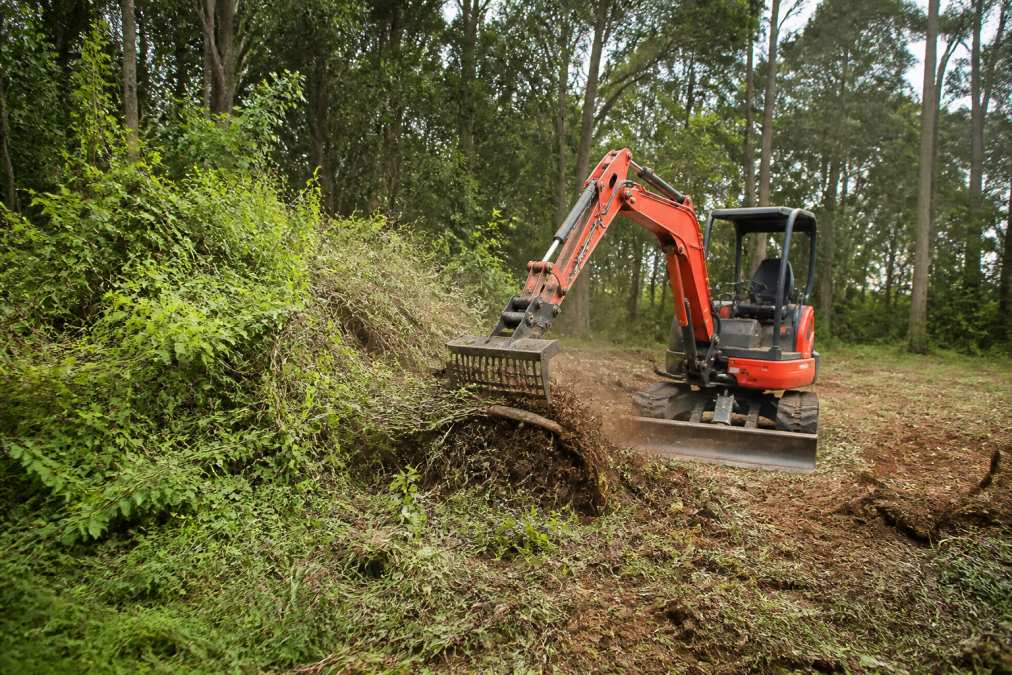
Forestry mulching is a way to clear overgrown acreage on sloping ground. A tracked mulcher grinds standing scrub, blackberry and regrowth into mulch on the spot, avoiding the mess of hauling green waste off site, and the erosion that comes with dragging cut material across bare soil.
Forestry Mulching and Slope Management
Slope is the defining constraint on most Dandenong Ranges blocks. A tracked machine handles grades a wheeled machine or bobcat cannot, and spreads mulch evenly as it works. That mulch layer holds moisture, suppresses weed regrowth and protects the soil surface.
Soil Erosion Prevention and Site Access
Soil erosion prevention comes down to two things: do not leave large areas of bare ground, and control where water runs. On clay soils, water sheets across the surface rather than soaking in, so any cleared slope needs mulch cover or a diversion.
- Gate widths and overhead clearance
- Track condition and whether it will take machine weight in wet weather
- Any underground services marked
- Where the machine can turn and where mulch will be spread
Step 6: Set Up Acreage Mowing Services and Ongoing Land Maintenance
Clearing is a one-off job. Keeping the block clear decides whether you repeat the exercise in two years. Regular acreage mowing services stop scrub and blackberry re-establishing, and keep grass within council height rules.
A maintenance pattern for blocks:
| Task | Frequency | Why It Matters |
|---|---|---|
| Mowing | Every 3-6 weeks in growing season | Stops grass seeding and scrub establishing |
| Noxious weed inspection | Monthly through spring and summer | Catches blackberry and ragwort before they spread |
| Regrowth removal | Twice per year | Clears woody regrowth before it thickens |
| Fuel reduction | Before summer | Meets bushfire overlay expectations |
| Mulch top-up | Annually on bare ground | Maintains erosion control |
What It Costs to Clear Overgrown Acreage
Pricing depends on the block, not a flat rate. There is no honest way to estimate clearing overgrown acreage without seeing the site, because the cost drivers are physical and specific to your land. What follows is a guide to how those variables translate into machine time.
The Four Cost Drivers
Vegetation density. Light grass and low scrub mulch quickly. Established blackberry, gorse and dense woody regrowth slow the machine because the operator works the head through the crown rather than sweeping across the surface. A block that looks uniform from the gate can vary within 20 metres.
How Estimates Are Usually Structured
Contractors in the Dandenong Ranges may work on models such as:
| Model | How It Works | Best Suited To |
|---|---|---|
| Hourly rate | Machine and operator charged per hour, with a minimum | Small jobs, uncertain density, or work where the scope may change |
| Day rate | Fixed rate for a full machine day | Medium blocks where density is reasonably consistent |
| Per hectare | Fixed rate per hectare cleared | Larger acreage where the working area is clearly defined |
A Worked Example
Consider a 2 hectare block in Monbulk with 1 hectare of mixed kikuyu, light scrub and scattered blackberry on a moderate slope with good gate access. A typical job involves an initial mulching pass, a second pass on the denser blackberry patches, mulch spread evenly across cleared ground, and one follow-up treatment within the growing season. A block like this may require one to two days of machine work, plus the follow-up visit.
Why a Phone Estimate Is Not Reliable
Anyone giving a firm figure over the phone without seeing the block is guessing. Density, slope, access and protected vegetation cannot be assessed from a description. A free on-site estimate takes under an hour and reflects the actual work.
Agriculture Victoria advice on managing weeds on private land
Common Mistakes to Avoid When Clearing Land
- Clearing before checking permits. Unauthorised clearing of native vegetation can trigger penalties and revegetation orders.
- Slashing blackberry and walking away. It re-shoots from the crown within months. Cut and treat, or it comes back stronger.
- Leaving bare ground on slopes. Clay soils on a slope will erode in the first heavy rain without mulch cover.
- Missing the pre-summer window. Fuel reduction done in February is fuel reduction done too late.
- Clearing everything at once. Staged clearing keeps habitat, reduces erosion risk, and is easier to manage.
- No maintenance plan. A cleared block reverts within two growing seasons without regular mowing and weed control.
Get the assessment, permits and weed strategy right, and the clearing itself is straightforward. Skip them, and you will pay for it twice.
Frequently Asked Questions
How much does it cost to clear an acre of land in the Dandenong Ranges?
Costs vary with vegetation density, slope, access and whether a planning permit is required. Dense scrub, blackberry and steep terrain take longer than open grass, so clearing overgrown acreage is priced per site rather than per acre. Terra Maintenance provides a free on-site estimate that accounts for the actual work, and pricing is confirmed once the block has been assessed.
What are the local council regulations for clearing vegetation in the Dandenong Ranges?
Most blocks fall under a planning scheme that includes a Green Wedge Zone and, in many cases, a Bushfire Management Overlay or Significant Landscape Overlay. Clearing native vegetation usually needs a planning permit unless an exemption applies, such as routine fuel reduction or removing noxious weeds. Always confirm requirements with your local council before starting work, because unauthorised clearing can attract penalties.
How do I identify declared noxious weed removal in Victoria on my property?
Declared noxious weeds in Victoria include blackberry, ragwort and gorse. These are listed under the Catchment and Land Protection Act and landholders are responsible for controlling them. Look for thorny thickets, yellow-flowering ragwort in spring and summer, and dense spiny shrubs. If you are unsure, a site assessment can confirm which species are present and how to treat them without spreading seed.
Do I need to follow bushfire management overlay requirements before clearing?
If your property is in a Bushfire Management Overlay, clearing for fuel reduction is often exempt from a planning permit, but there are limits on how much vegetation you can remove and how close to a dwelling. The overlay also sets defendable space requirements. Check the specific schedule for your block and keep records of any clearing done for fire prevention.
An overgrown block is a manageable problem when it is approached in the right order. Terra Maintenance handles land clearing, noxious weed management, forestry mulching, and ongoing acreage mowing across the Dandenong Ranges and outer south-east Melbourne, with free on-site estimates, fully insured owner-operated crews, and quiet battery-powered equipment. Get an estimate from Terra Maintenance and get your block back under control.