 how-to
Expert Hedge Trimming in the Dandenong Ranges
Table of Contents
- What Expert Hedge Trimming Involves
- Your Seasonal Hedge Care Calendar for the Hills
- Bushfire Fuel Reduction Victoria: Hedges and Your Obligations
- Managing Overgrowth on Sloping Blocks
- Hedge Health, Pests and Disease Identification
- DIY vs Professional Hedge Trimming: Equipment and Safety
- Green Waste Disposal and Environmental Impact
- Frequently Asked Questions
Last Updated: October 2, 2026
What Expert Hedge Trimming Involves
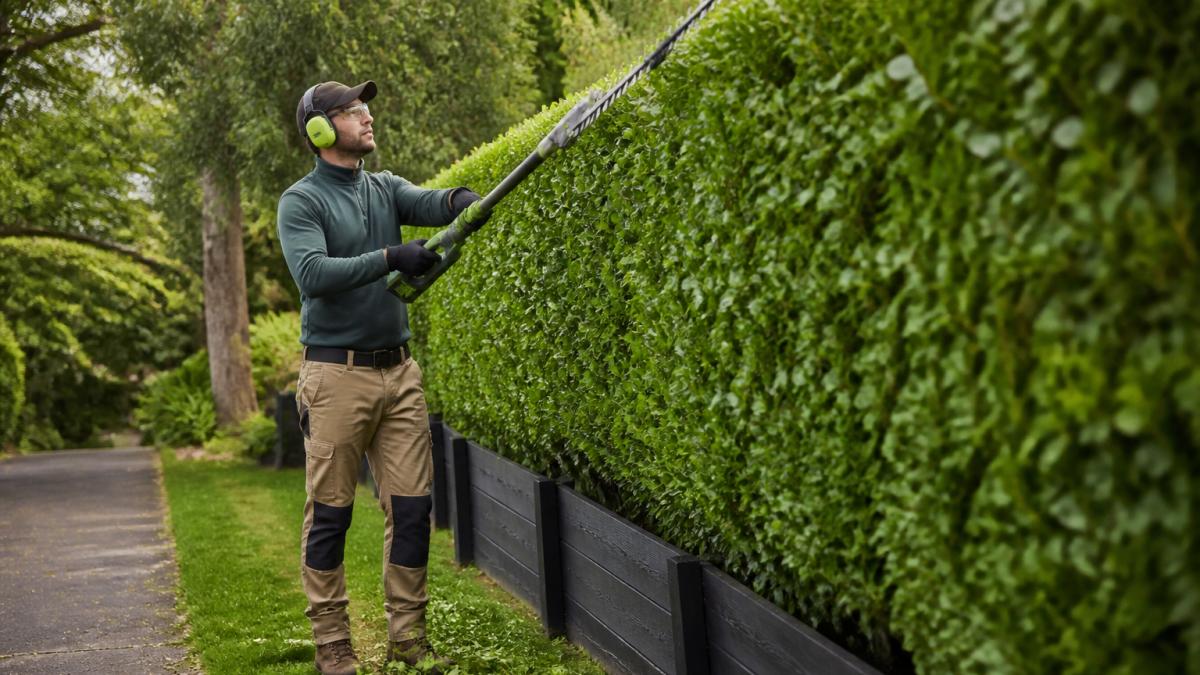
Expert hedge trimming is the practice of shaping, reducing and restoring hedges using the right cutting technique for each species, growth stage and site condition. At Terra Maintenance, we treat it as three distinct jobs rather than one.
Shaping maintains an existing form. Reduction takes height and width back under control. Restoration rebuilds a hedge that has been let go for years.
Getting the distinction right matters. A hedge cut the same way every visit slowly thins out, because repeated tip trimming encourages dense outer growth and starves the interior of light.
Shaping, Reduction and Restoration
Each job needs a different approach.
- Shaping: light, frequent cuts that keep lines clean and density even
- Reduction: heavier cuts into older wood, staged over more than one visit where needed
- Restoration: clearing dead material, correcting the framework, then rebuilding the canopy over a season or two
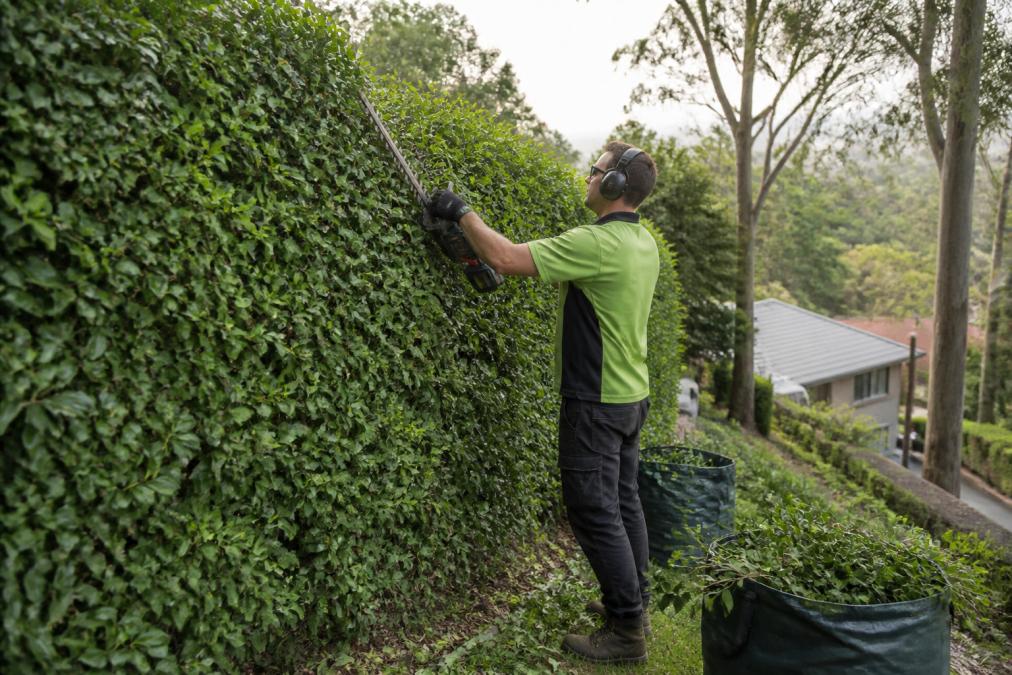
A common mistake is cutting a conifer hedge back into bare wood. Most conifers will not reshoot from old timber, so the bare patch stays bare. Broadleaf hedges such as photinia and pittosporum are far more forgiving.
Your Seasonal Hedge Care Calendar for the Hills
Timing follows the southern hemisphere growing cycle, not the calendar in a northern hemisphere guide. In the hills, the practical calendar splits by hedge type: fast-growing exotics, slow-growing natives, and flowering hedges that set buds on old wood.
Spring and early summer drive the heaviest growth. Late autumn and winter suit structural work, when growth slows and the plant is under less stress.
| Season | Exotic hedges (photinia, pittosporum, privet) | Native hedges (lilly pilly, westringia, callistemon) | Flowering hedges (camellia, gardenia) |
|---|---|---|---|
| Spring (Sep-Nov) | Light shaping every 3-4 weeks as growth flushes | Tip prune after flowering finishes | Do not cut if buds are set, wait until flowering ends |
| Summer (Dec-Feb) | Fortnightly tip trimming to hold lines, watch for heat stress on exposed banks | Light shaping only, avoid heavy cuts in the heat | Deadhead spent flowers, light tidy only |
| Autumn (Mar-May) | Final shaping before growth slows, reduction work if needed | Structural shaping while the plant is still active | Prune immediately after flowering to shape for next season |
| Winter (Jun-Aug) | Structural pruning, height reduction, restoration | Minimal cutting, frost and wet clay slow recovery | Minimal cutting, protect from frost pockets in gullies |
Spring and Summer Growth Management
Warm soil and steady rain push hedges hard through spring. Fortnightly or monthly trimming keeps lines sharp without shocking the plant. On the heavier clay soils around Monbulk and Cockatoo, growth can stall in a wet spring if drainage is poor, so a light trim is safer than a hard cut when the ground is waterlogged.
Photinia and pittosporum can put on 30 to 60 centimetres of new growth in a good spring. If you skip a cut, the hedge hardens into a shape that needs reduction rather than shaping to fix.
Autumn and Winter Pruning Windows
Autumn into winter is the window for heavier reduction. Growth has slowed, so cuts heal with less dieback, and you can see the hedge's structure without foliage in the way.
Two local cautions:
- Frost pockets form in the gullies around Emerald, Gembrook and Avonsleigh. A hard cut in July can leave fresh wounds exposed to frost, so leave structural work until late winter once the worst of the cold has passed.
- Flowering hedges such as camellia and gardenia set buds on old wood. Cutting them in winter or early spring removes the flowers for that year. Prune straight after flowering instead.
Native vs Exotic: Why the Calendar Differs
Most native hedges in the ranges, including lilly pilly, westringia and callistemon, tolerate light shaping year round but resent hard cuts into old wood. Exotics such as photinia, privet and pittosporum reshoot readily and can take a heavier reduction.
Conifers are the exception. Most will not reshoot from bare timber, so a conifer hedge that has been let go needs staged reduction over two or three seasons rather than a single hard cut.
Bushfire Fuel Reduction Victoria: Hedges and Your Obligations
Hedges near a dwelling are part of your fuel load, and in a bushfire overlay area that makes them a compliance issue as well as a gardening one.
Under Victorian fuel reduction requirements, landowners in designated areas must manage vegetation on their property, and councils issue fire prevention notices setting out what must be cleared and by when. The exact requirements depend on your council and your property's overlay, so check the notice or your council's fire prevention page for the specifics that apply to you.
Practical steps that reduce risk:
- Keep hedges away from the immediate dwelling perimeter
- Separate hedges from tree canopies so fire cannot ladder upward
- Clear gum leaf and bark litter from beneath and around plantings
- Reduce hedge height near structures rather than letting it climb
Managing Overgrowth on Sloping Blocks
Steep and sloping blocks are the hardest sites in the ranges, and they are also the most common.
Hedge Health, Pests and Disease Identification
A hedge that thins, yellows or drops leaves in patches is telling you something before it dies.
Common issues in local hedges:
- Root rot from water sitting in clay, showing as decline on the lowest part of the block
- Scale and mites, which leave sticky residue or fine webbing
- Box hedge blight, which causes brown patches that spread if shears are not cleaned between plants
- Weed competition, especially blackberry and ragwort, both declared noxious weeds in Victoria
DIY vs Professional Hedge Trimming: Equipment and Safety
DIY works for a low, accessible hedge you can reach from the ground with domestic gear. It stops working once height, slope or volume climbs. The break point on most hills properties is around two metres of height, or any hedge on a bank steeper than about 15 degrees.
What Domestic Gear Can and Cannot Do
A domestic electric or battery trimmer handles light regrowth on a low hedge. It struggles with:
- Stems thicker than about 10 millimetres, which blunt the blade and stall the motor
- Continuous runs longer than 20 to 30 minutes before the battery drains
- Anything above shoulder height, which forces ladder work
- Conifer and hardwood hedges that need a pole saw or chainsaw for the framework
The Real Safety Risks on Hills Blocks
Falls are the most common serious injury in garden work, and the hills produce the worst conditions for them:
- Wet clay on a slope holds water and stays slick for days after rain
- Ladders on uneven ground shift under load, especially when the operator is reaching sideways
- Overgrown hedges on a bank hide trip hazards, retaining walls and drops underneath
- Powerlines run close to mature hedges on many older properties, and contact is a life-threatening risk
When DIY Stops Making Sense
The honest test is not cost alone, it is risk and finish quality:
| Factor | DIY | Professional |
|---|---|---|
| Best for | Low, flat, accessible hedges under 2 m | Tall, sloping or large-volume hedges |
| Equipment | Domestic trimmer, hand tools, ladder | Commercial trimmers, pole saws, chipper |
| Safety risk | High on slopes and at height | Managed with training and gear |
| Finish | Uneven lines, bruised cuts on thick stems | Clean lines, correct cut angle per species |
| Waste | Green bin or tip runs over several weekends | Chipped and removed on site |
| Insurance | Owner's risk | Public liability cover |
| Time | Multiple weekends for a tall run | Completed in a single visit in most cases |
Green Waste Disposal and Environmental Impact
Hedge clippings are bulky, and dumping them is both wasteful and, on public land, illegal.
Frequently Asked Questions
What is the best time of year to trim hedges in the Dandenong Ranges?
The ideal timing depends on the hedge species and your goal. For most formal hedges, a light trim in spring (September to November) and again in late summer (February) keeps growth dense and tidy. Avoid heavy pruning during the hottest months and frosty periods. If your hedge is part of a bushfire fuel reduction plan, check your local council's fire hazard requirements for specific cut-off dates.
How does the seasonal hedge care calendar work for local conditions?
A seasonal hedge care calendar for the Dandenong Ranges accounts for cool, wet winters and warm, dry summers. Spring is for shaping and removing dead wood. Summer focuses on managing rapid growth. Autumn is ideal for structural pruning before winter slows growth. Winter is best for major restoration work on dormant plants. Adjust based on rainfall and species.
Can you help with managing overgrowth on sloping blocks?
Yes. Sloping blocks in the Dandenong Ranges present challenges like access and erosion control. We use lightweight, battery-powered equipment and proven techniques to safely reduce overgrown hedges and shrubs without destabilising the soil. For severe neglect, a staged approach over several visits may be needed to avoid shocking the plants.
Do you provide documentation for council compliance?
We can provide a basic service record confirming the date and type of work completed. This helps demonstrate you have maintained your property. For specific council requirements, such as fire hazard reduction notices, we recommend contacting your local council directly to confirm what documentation they accept.