 how-to
Book Commercial Grounds Maintenance: 2026 How-To Guide
Table of Contents
- What Commercial Grounds Maintenance Covers
- Step 1: Book an Onsite Assessment and Site Consultation
- Step 2: Choose a Maintenance Contract Type
- Step 3: Set Your Commercial Lawn Mowing Services Dandenong Ranges Schedule
- Step 4: Meet Council Compliance Grounds Maintenance Victoria Rules
- Step 5: Add Commercial Property Fire Hazard Reduction
- Step 6: Request Your Commercial Garden Maintenance Estimate
- Insurance, Liability and Documentation
- Frequently Asked Questions
Last Updated: September 20, 2026
What Commercial Grounds Maintenance Covers
Commercial grounds maintenance is the scheduled care of a business premises outdoors: lawns, garden beds, hedges, trees, hard surfaces and waste removal. Booking it properly means locking in a scope, a schedule and a compliance standard before any mower arrives.
Core tasks and service inclusions
A standard commercial grounds maintenance program typically includes:
- Regular lawn mowing and edging across turf areas
- Turf management, including fertilising and weed control
- Shrub pruning and hedge trimming to set heights
- Garden bed maintenance and mulching
- Leaf and bark litter removal, heavy in gum-tree country
- Hard surface sweeping and blowing of paths and car parks
- Green waste removal from site
- Basic irrigation system checks
The mix shifts with the property. A childcare centre needs different attention to a warehouse yard or strata complex.
What sits outside a standard maintenance program
Some work is quoted separately because it is one-off or specialised. Tree removal and major pruning, land clearing, overgrowth management on neglected blocks, gutter cleaning and large-scale weed management usually sit outside a routine contract. Ask for these to be listed as exclusions so nothing is assumed.
Step 1: Book an Onsite Assessment and Site Consultation
An onsite assessment is a walkthrough with a grounds maintenance contractor to map turf areas, garden beds, access points, hazards and compliance obligations. It is the only reliable way to price commercial grounds maintenance, because no two ranges sites are alike.
What to have ready for the walkthrough
- A site plan or aerial view, if you have one
- Your current maintenance schedule, if any
- Any council notices or compliance correspondence
- Your budget range for ongoing grounds care
- Access details: gates, codes, key holders, parking
- A list of areas that must never be disturbed
The more you bring to the walkthrough, the tighter the estimate. Vague briefs produce vague pricing.
Step 2: Choose a Maintenance Contract Type
There are three common contract types for commercial grounds maintenance: scheduled service agreements, seasonal programs and one-off clean-ups. The right one depends on how much control you need over timing, reporting and budgeting.
| Contract type | Best for | Visit frequency | Reporting | Typical term |
|---|---|---|---|---|
| Scheduled service agreement | Retail, strata, hospitality | Weekly to monthly | Standard service records | 12 months, rolling |
| Seasonal program | Acreage, bushfire overlay blocks | Peaks in spring and summer | Seasonal completion report | 12 months, seasonal review |
| One-off clean-up | Neglected or new sites | Single visit, then review | Photo record of before and after | Single engagement |
What to negotiate before you sign
- Term and renewal: Most agreements run 12 months. Ask whether renewal is automatic and how much notice you need to change frequency or exit.
- Notice period: 30 days is common for frequency changes.
- Frequency flexibility: Confirm whether you can add or drop a visit mid-term, and how that is priced.
- Scope creep: State clearly what triggers extra charges, such as storm clean-up, additional green waste or one-off weed spraying.
- Reporting obligations: If you need dated records for council or insurer purposes, put that in the agreement.
- Insurance currency: Require a certificate of currency at signing and at each renewal.
Matching the contract to your site
A retail frontage in Upwey or Tecoma usually suits a scheduled agreement with weekly or fortnightly visits and a fixed scope. A steep acreage block in Belgrave or Monbulk with heavy clay and mature gums often suits a seasonal program with defined spring and summer peaks. A newly leased Gembrook warehouse yard left untouched for a year usually needs a one-off clean-up first, then a scheduled agreement.
Step 3: Set Your Commercial Lawn Mowing Services Dandenong Ranges Schedule
Commercial lawn mowing services in the Dandenong Ranges need a schedule built around local growth patterns, not a flat twelve-month calendar. Turf here grows hard from September through April and slows sharply from May to August.
A workable annual schedule looks like this:
- Spring (September to November): fortnightly mowing, first fertiliser application, weed control, mulch top-up
- Summer (December to February): weekly to fortnightly mowing, irrigation checks, fuel reduction work
- Autumn (March to May): fortnightly mowing, leaf and bark litter removal, final fertiliser
- Winter (June to August): monthly or as-needed mowing, pruning of dormant shrubs, gutter cleaning
A seasonal maintenance checklist for the ranges
- Confirm mowing frequency for the coming season
- Book fuel reduction before the fire danger period
- Check irrigation coverage before summer
- Schedule gutter cleaning before autumn leaf fall
- Review weed management for declared species
- Refresh mulch on beds ahead of summer heat
- Confirm green waste removal arrangements
Step 4: Meet Council Compliance Grounds Maintenance Victoria Rules
Council compliance for grounds maintenance in Victoria centres on grass height, noxious weeds and fire hazard reduction. Councils can issue notices for overgrown land, and requirements tighten further in bushfire-prone areas.
Step 5: Add Commercial Property Fire Hazard Reduction
Commercial property fire hazard reduction is the planned removal of fine fuels, long dry grass, fallen bark and low branches to reduce fire risk. It is separate work from routine mowing and needs its own booking.
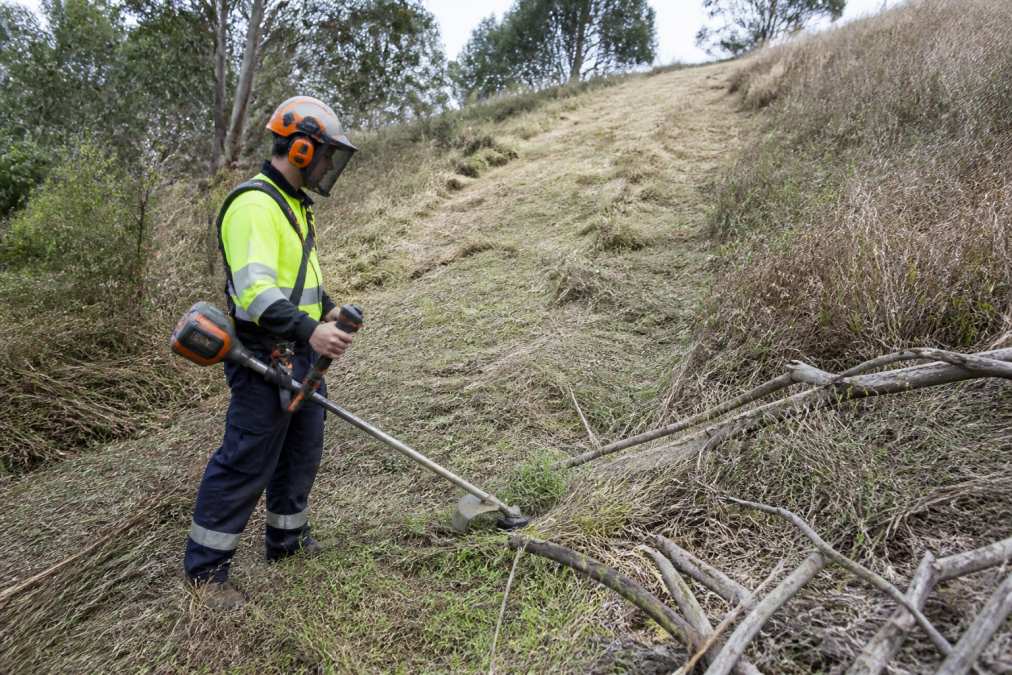
A practical fuel reduction program covers:
- Slashing long grass across the block
- Removing fallen bark and leaf litter
- Pruning low branches on retained trees
- Clearing vegetation along access tracks and fence lines
- Maintaining a cleared fuel break around buildings and assets
- Removing the cut material from site
Step 6: Request Your Commercial Garden Maintenance Estimate
A commercial garden maintenance estimate should itemise the scope, frequency, inclusions and exclusions so you can compare offers on equal terms. Pricing depends on the site, not a flat rate.
Pricing factors and what to compare
Cost drivers on a commercial grounds maintenance estimate include:
- Total area, including sloped and hard-to-reach sections
- Frequency of visits and length of the contract term
- Condition of the site at the start of the agreement
- Access constraints, gates, parking and travel time
- Volume of green waste and disposal requirements
- Compliance and reporting obligations
- Seasonal peaks such as fuel reduction
Compare estimates on inclusions, not headline numbers. A lower estimate that excludes green waste removal or mulch may not be lower once those are added back.
Insurance, Liability and Documentation
Insurance and documentation protect you if something goes wrong on site. Ask any contractor for a certificate of currency before work starts, and check the cover level against your own risk.
What cover to check
- Public liability: Covers injury to third parties or damage to their property arising from the work. $20 million is a common commercial threshold. Check the expiry date, not just the figure.
- Workers compensation: Required in Victoria for employers. Ask for evidence that anyone who sets foot on your site is covered.
- Motor vehicle and equipment: Relevant if the contractor's vehicle or equipment damages your property or a neighbour's.
- Professional indemnity: Less common in grounds maintenance, but worth asking about if the contractor provides compliance advice or reporting you rely on.
Where liability sits
Liability on a commercial site is shared, and the split should be clear before work starts.
- Contractor liability: Damage caused by the contractor's work, equipment or staff, such as a mower throwing a stone through a window or a vehicle rutting a soft lawn.
- Owner or occupier liability: Site hazards the contractor was not told about, such as hidden irrigation, unstable retaining walls, asbestos in older outbuildings or unmarked services.
- Shared risk: Boundary vegetation, shared driveways and adjoining properties. On ranges blocks, overhanging gum limbs and root damage are common sources of dispute.
Documentation to request from any contractor
- Certificate of currency for public liability insurance
- Details of workers compensation cover
- A written scope of works and schedule
- Dated service records after each visit
- Photo records for compliance and fuel reduction work
- A clear point of contact for issues
- A simple incident reporting process
Why documentation matters beyond insurance
Dated service records and photos do three jobs at once. They close out council notices about grass height or noxious weeds, support insurance claims if damage occurs, and give property managers and strata committees an audit trail for owners, tenants and insurers.
Frequently Asked Questions
What should be included in a commercial grounds maintenance contract?
A clear contract lists every task, how often it happens, and who is responsible for what. Typical inclusions are scheduled lawn mowing and turf management, shrub pruning, weed control, fertilization, mulching, irrigation checks, waste removal and hard surface clearing. It should also state response times for extra callouts, whether documentation such as site inspection reports is provided, and the notice period for changes. Ask for service inclusions in writing before you sign.
How often should commercial grounds be maintained in Victoria?
Most commercial sites need mowing and edging every two to four weeks through the growing season, from spring into early autumn, then less often over winter. High-traffic or high-visibility sites often move to a fortnightly schedule, while acreage and low-use blocks can stretch to monthly. Your frequency should be set at the onsite assessment, based on grass type, growth rates, slope and how the site is used. Council grass height rules can also set a minimum frequency.
Why is battery-powered equipment preferred for commercial grounds maintenance?
Battery equipment runs far quieter than petrol models, which matters on sites near homes, offices and schools where noise complaints are a risk. It also produces no exhaust fumes at the point of use, so work can continue close to buildings, outdoor dining areas and staff. For the operator, there is less vibration, no fuel handling and no pull-start. The trade-off is run time per battery, so a contractor needs enough charged packs to cover a full site visit.
How do I request an estimate for commercial property maintenance?
Book an onsite assessment first. A contractor needs to see the block, not just a postcode, because slope, access, grass type and overgrowth all change the work involved. During the walkthrough, point out boundaries, problem areas, noxious weeds and any council or fire overlay obligations. Ask for the estimate in writing with the task list, frequency and inclusions spelled out. Pricing depends on site size, access and visit frequency, so confirm current estimates directly with the provider.